← Learn library10 written guides.
Follow the complete ten-day Houdini Python introduction in educational order, from Day 1 through Day 10: Functions, then Classes and Windows complete the series. Historical interfaces and workflows may have changed.
Follow the listed order and use Previous / Next on each lesson page.
Written guides were prepared with AI assistance from the original captions and editorially approved. Software workflows have not been independently reproduced; historical interfaces, technical qualifications and source limitations remain applicable. Video-only resources are individually identified.
This collection includes 1 individually labeled Legacy lessons. Original workflow distinctions and Legacy labels are retained per lesson. Do not assume recording age alone establishes Legacy status.
Lessons in order
 ↗
Video tutorialHoudini & Procedural WorkflowsLesson 1
Legacy TutorialWritten guide
YouTube: Date unknown
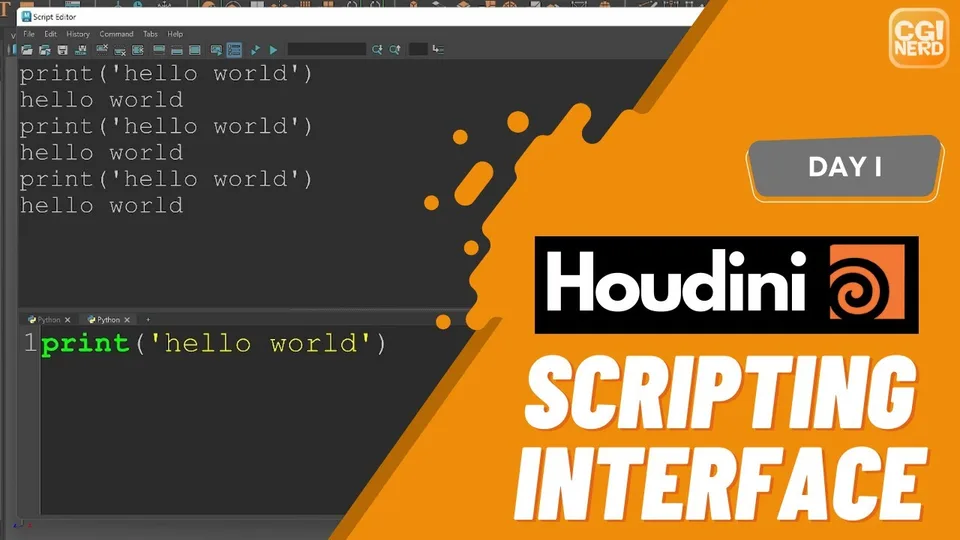
The first Houdini Python lesson introduces places to write and run code, including the Python interface, Python Source Editor and shelf tools. The captions use a Hello World print example and discuss when source-editor code executes. These preliminary notes identify the introductory scope; they are…
Read the guide →
 ↗
Video tutorialHoudini & Procedural WorkflowsLesson 2
Written guide
YouTube: Date unknown
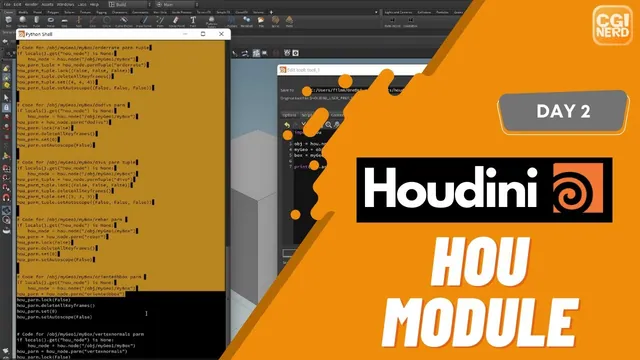
The instructor explains how to access the hou module reference within Houdini's context menu to identify available Python commands. The speaker describes using the Python shell to import the module and create geometry nodes by assigning variables to specific contexts. The instructor walks through creating…
Read the guide →
 ↗
Video tutorialHoudini & Procedural WorkflowsLesson 3
Written guide
YouTube: Date unknown
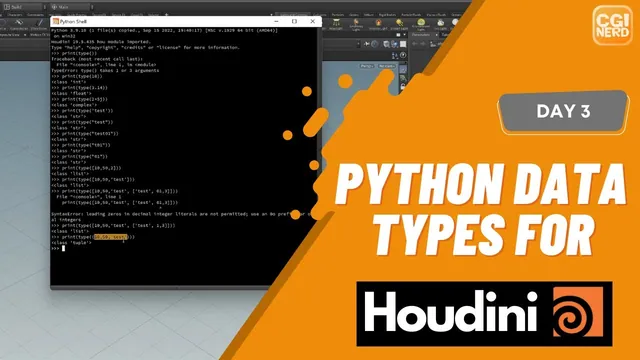
The instructor explains that the lesson covers Python data types within Houdini, specifically aiming to understand the basics of each type and how to hold them in variables. The speaker describes numeric data types, distinguishing between integers, floating-point numbers, and complex numbers, while noting that…
Read the guide →
 ↗
Video tutorialHoudini & Procedural WorkflowsLesson 4
Written guide
YouTube: Date unknown
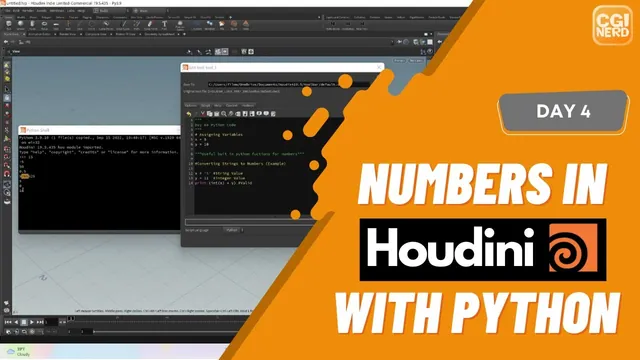
The instructor explains how to assign variables and apply basic arithmetic operators, including addition, subtraction, multiplication, division, exponentiation, and modulo, within a Python environment. The speaker describes using built-in functions like int and float to convert string values into numeric types, noting that converting a…
Read the guide →
 ↗
Video tutorialHoudini & Procedural WorkflowsLesson 5
Written guide
YouTube: Date unknown
The instructor explains how to define strings using single or double quotes and describes the use of multi-line strings for file information. The speaker walks through string concatenation and repetition, noting that these operations do not automatically add spaces between elements. The instructor describes escape…
Read the guide →
 ↗
Video tutorialHoudini & Procedural WorkflowsLesson 6
Written guide
YouTube: Date unknown
The instructor explains that Python lists in Houdini can contain mixed data types and are accessed via zero-based or negative indices. The speaker describes built-in list functions such as length, min, max, sum, and sort, noting that sorting reorders elements numerically. The instructor walks through…
Read the guide →
 ↗
Video tutorialHoudini & Procedural WorkflowsLesson 7
Written guide
YouTube: Date unknown
The instructor explains basic Python condition statements, describing how if statements check for true or false values to determine output. The speaker walks through various comparison and logical operators, detailing how greater than, less than, and keyword operators like and and or function within conditions.…
Read the guide →
 ↗
Video tutorialHoudini & Procedural WorkflowsLesson 8
Written guide
YouTube: Date unknown
The instructor introduces Python loops in Houdini. The speaker explains iteration over lists or ranged values and uses indented code with print output to illustrate a for loop. The lesson discusses range start, stop and increment values and how the increment affects the resulting sequence.
Read the guide →
 ↗
Video tutorialHoudini & Procedural WorkflowsLesson 9
Written guide
YouTube: Date unknown
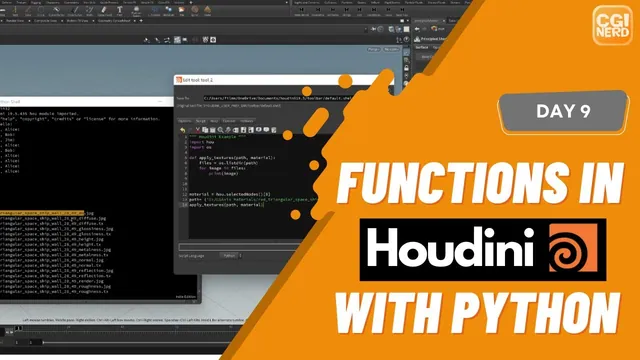
The instructor explains the syntax for defining Python functions in Houdini, covering the use of the `def` keyword, indentation for scope, and the execution of functions via parentheses. The speaker describes how to manage function arguments, including setting default values and using the `return` statement…
Read the guide →
 ↗
Video tutorialHoudini & Procedural WorkflowsLesson 10
Written guide
YouTube: Date unknown
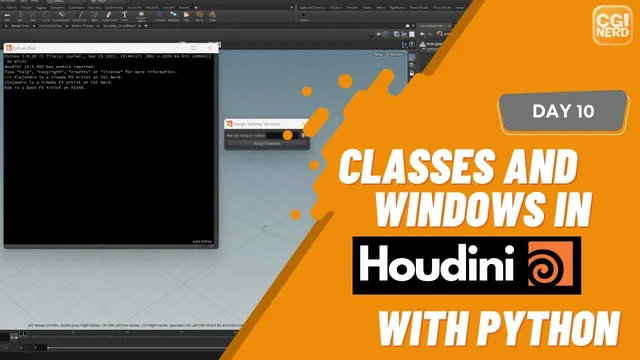
The instructor explains the fundamental structure of Python classes, describing how to define methods and use the 'self' convention to manage instance variables. The speaker walks through creating a custom window by using Qt dialog classes, detailing the setup of widgets, layouts, and signal connections.…
Read the guide →